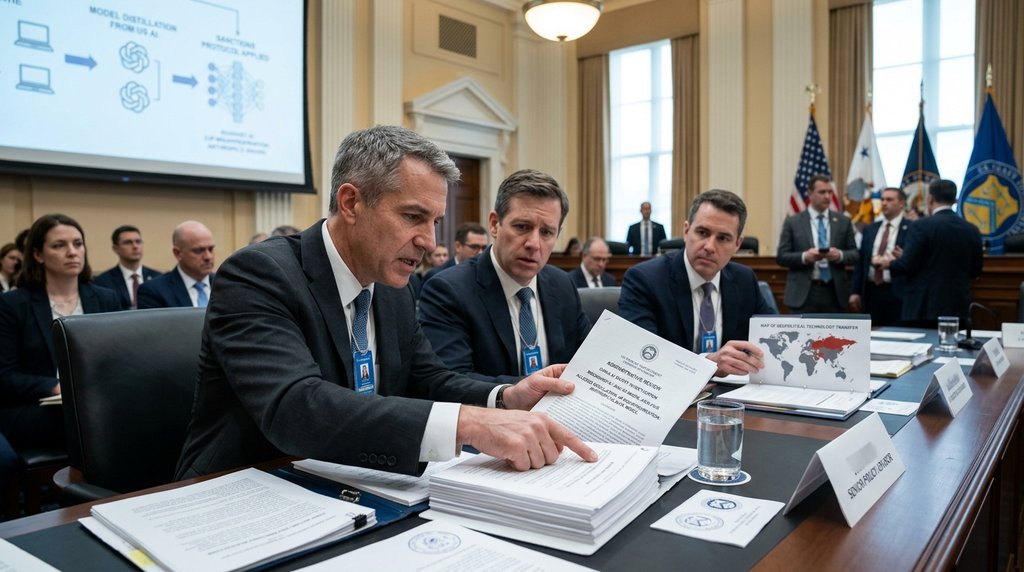
U.S. Treasury Secretary Scott Bessent has issued a warning regarding potential sanctions against Chinese artificial intelligence companies. This stern message comes after White House officials publicly accused Moonshot, a prominent Chinese AI firm, of allegedly distilling Anthropic's Fable model to develop its Kimi K3 offering. The accusation centers on the unauthorized use of proprietary AI technology, marking a significant escalation in the ongoing global competition over AI intellectual property and technological leadership. The Treasury's statement underscores a growing resolve within the U.S. government to protect domestic AI innovations and to address perceived infringements by foreign entities.
The allegations highlight the increasing geopolitical tensions surrounding advanced AI development. As large language models become central to economic and strategic power, the protection of intellectual property and the prevention of technology transfer are paramount concerns for leading nations. The U.S. has consistently expressed concerns about the potential for foreign adversaries to leverage American technological advancements, particularly in critical sectors like AI, for their own strategic benefit. This incident, if substantiated, could set a precedent for how governments address cross-border AI intellectual property disputes and the measures they are willing to take to safeguard their technological edge. The competitive landscape in AI is characterized by rapid innovation and significant investment, making the integrity of proprietary models a key factor in maintaining a competitive advantage.
The Treasury's warning signals a potential shift towards more aggressive enforcement actions in the AI domain, impacting developers, enterprises, and policymakers worldwide. For AI developers, it reinforces the critical importance of ethical AI development practices and stringent intellectual property safeguards. Enterprises relying on AI models may face increased scrutiny regarding the provenance and licensing of their foundational technologies, potentially leading to supply chain re-evaluations. Policymakers globally will likely intensify discussions on international norms for AI intellectual property, data governance, and the responsible development of advanced models. This development could further fragment the global AI ecosystem, fostering an environment where national security concerns increasingly dictate technological collaboration and market access, rather than purely commercial considerations. The long-term impact could include a more bifurcated AI industry, with distinct national or regional ecosystems emerging under differing regulatory and geopolitical frameworks.