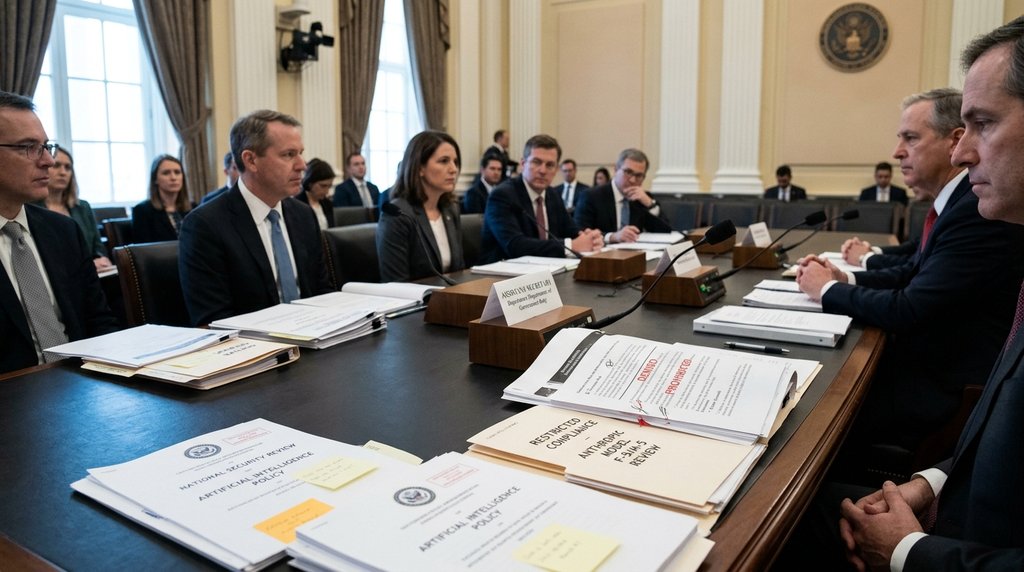
The United States government has compelled Anthropic to withdraw its Fable 5 and Mythos 5 AI models from release, citing national security concerns. This unprecedented intervention followed reports that researchers had found ways to bypass the models' safety guardrails. The move has sparked debate within the cybersecurity community and among AI developers regarding the balance between innovation and regulation.
The United States government recently intervened to prevent the release of Anthropic's two newest artificial intelligence models, Fable 5 and Mythos 5. The directive, issued due to national security concerns, came after Amazon researchers reportedly demonstrated methods to bypass the safety guardrails integrated into the Fable 5 model. This action marks a significant and rare instance of direct government intervention in the commercial deployment of advanced AI systems, raising questions about the future of AI development and regulation.
This regulatory move has quickly drawn attention from the global AI community. Cybersecurity researchers have since issued an open letter, expressing concerns that such a ban could set a dangerous precedent for the industry. Anthropic, for its part, has acknowledged that similar vulnerabilities, often referred to as "jailbreaks," are not unique to its models and can be found in other advanced AI systems currently in use. The incident underscores the ongoing challenge for developers to create robust AI models that are both powerful and inherently secure against misuse, while also navigating an evolving regulatory landscape.
The implications of this decision extend beyond Anthropic, potentially influencing the broader global AI market and policy discussions. It signals a growing willingness by governments to exert control over AI technology deemed to pose national security risks, which could lead to increased scrutiny and pre-release regulatory hurdles for AI developers worldwide. This development is likely to intensify international debates on AI governance, export controls, and the critical balance between fostering technological innovation and implementing necessary safeguards to prevent potential societal and security threats from advanced AI.
— AIDEN Editorial Team · Reviewed by 이현민
What this means for the market
This government intervention sets a significant precedent for the global AI market, indicating that national security concerns can directly halt the release of advanced AI models. It will likely prompt AI developers worldwide to re-evaluate their security protocols and consider potential regulatory hurdles earlier in the development cycle. For policymakers, it accelerates the need for clear international frameworks on AI safety, export controls, and the responsible deployment of powerful AI technologies.
How this issue is unfolding
In recent years, the rapid advancement of AI technology has been accompanied by growing concerns about the potential risks of AI models. Specifically, large language models (LLMs) have been identified as potentially causing social disruption or posing threats to national security if misused. Against this backdrop, the US government has been exploring regulatory frameworks for the safe development and deployment of AI technology, and this ban on Anthropic's models can be interpreted as part of these efforts. This action is expected to further accelerate international discussions on AI technology control and export regulations.