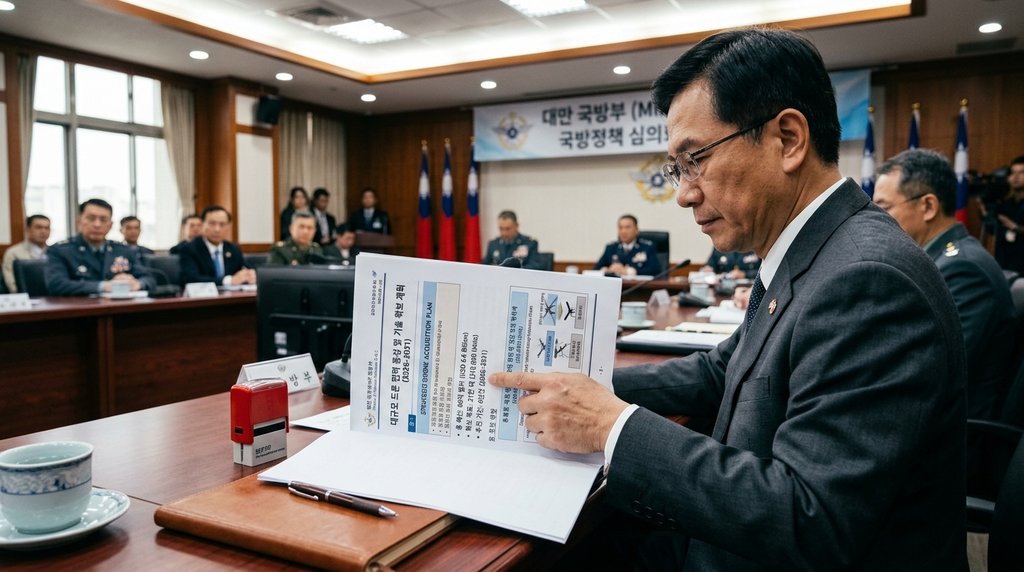
Taiwan's Ministry of National Defense has unveiled a substantial plan to significantly enhance its uncrewed military systems, proposing a special budget of $6.6 billion over six years, from 2026 to 2031. This ambitious initiative aims to procure more than 208,000 coastal attack drones, over 1,400 coastal reconnaissance drones, and 1,320 uncrewed surface vessels. The move represents a critical boost to Taiwan's defense capabilities, which currently include approximately 5,000 US-made and domestically produced drones, as the self-governing democracy seeks to deter potential military action from China. The budget proposal, presented on June 18, underscores Taiwan's commitment to strengthening its domestic drone production and military readiness in the face of escalating regional tensions. This strategic investment highlights a broader shift towards leveraging advanced autonomous technologies for national security.
The expansion is critical for Taiwan's national security, given the persistent military threat from China, which views the island as a breakaway province. By significantly increasing its drone arsenal, Taiwan aims to establish a robust asymmetric defense strategy, making any attempted invasion more challenging and costly for an aggressor. This strategic pivot also involves Taiwanese companies forging international partnerships to supply drones to the US military and other global buyers, indicating a broader role for Taiwan in the international defense technology market and fostering deeper security ties. Recent military exercises have showcased Taiwan's current capabilities, with soldiers deploying US-made Altius-600 loitering munitions from Anduril Industries and domestically produced drones to strike offshore targets, demonstrating the practical application and growing sophistication of these systems in defense scenarios. These exercises underscore the urgency and strategic importance of the proposed drone acquisition.
The substantial investment in drone technology will have far-reaching implications for Taiwan's defense posture, enhancing its ability to monitor and respond to maritime threats with greater agility and precision. For the global AI industry, this surge in demand for advanced uncrewed systems highlights the growing integration of artificial intelligence in military applications, driving innovation in autonomous navigation, target recognition, and swarm intelligence. Developers and manufacturers of AI-powered drone components, from sophisticated sensors to advanced control systems and data processing units, could see increased opportunities for collaboration and export. Furthermore, this development underscores a global trend among nations to leverage AI-driven drone technology for national security, potentially influencing defense procurement strategies worldwide and fostering further international partnerships in the rapidly evolving sector of autonomous warfare. This also signals a potential shift in the global supply chain for defense AI.