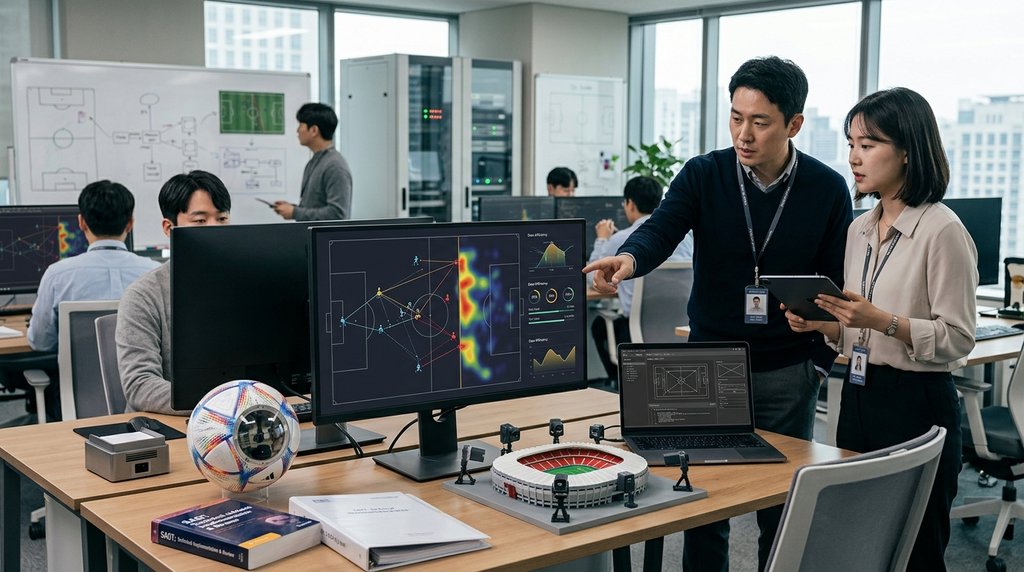
Semi-automated offside technology (SAOT) made its historic debut at the 2022 Men’s World Cup in Qatar, playing a pivotal role in the dramatic final between Argentina and France. With just minutes remaining in extra time and the score tied, Argentine captain Lionel Messi scored a goal that would have given his team a 3–2 lead. However, a referee’s flag was raised, signaling a potential offside violation by Argentine forward Lautaro Martinez, who was thought to be illegally positioned. The decision carried immense weight, potentially determining the World Cup champion and the fate of one of soccer's most prestigious tournaments. SAOT was deployed to rapidly analyze the play, producing an image that clearly showed a French defender was slightly closer to the goal than Martinez, thus confirming Martinez was in a legal attacking position, as players' hands and arms are not considered for offside decisions. The referee subsequently ruled the goal counted, a decision that proved crucial as Argentina ultimately won the tournament after a penalty shootout.
The introduction of SAOT represents a significant advancement in sports officiating, building on FIFA’s ongoing commitment to integrating technology into the game. Prior innovations, such as goal-line technology and the Video Assistant Referee (VAR) system, have become standard at the highest levels of soccer, aiming to reduce human error and enhance fairness. SAOT takes this a step further by providing rapid, objective analysis for one of the most complex and frequently debated calls in football. Its ability to quickly process player positions using advanced tracking and ball sensor data minimizes delays and reduces the subjective element often associated with traditional offside decisions, thereby streamlining gameplay and increasing accuracy in high-pressure situations.
The successful implementation of SAOT at the World Cup has broader implications for the sports technology landscape, extending beyond soccer. This technology demonstrates how advanced AI and sensor systems can be leveraged to improve decision-making across various sports, ensuring greater transparency and reducing controversy. For developers, it highlights a growing market for sophisticated real-time analytics and computer vision solutions tailored for athletic competitions. For sports organizations, it sets a precedent for adopting cutting-edge tools to maintain competitive integrity and enhance the fan experience. The collaboration between FIFA and technology teams underscores a trend where innovation is increasingly central to the evolution of professional sports, promising more accurate and fair outcomes in future competitions.