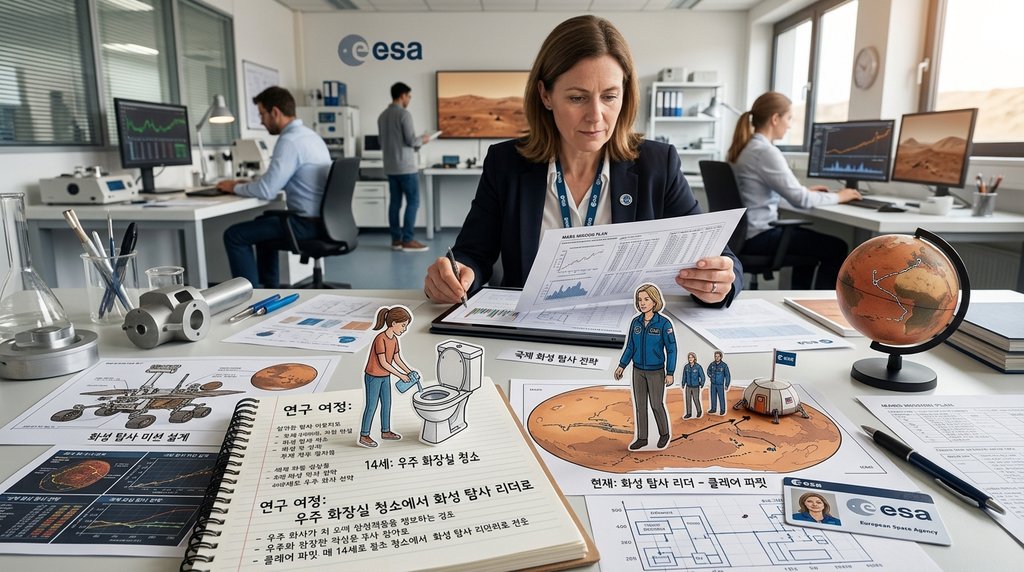
Claire Paffett, a scientist whose career began with an unconventional experience cleaning a space toilet at the age of fourteen, now holds a pivotal leadership role in international Mars exploration. Her unique trajectory has culminated in her leading the European Space Agency's (ESA) future Mars exploration team and chairing the influential International Mars Exploration Working Group. In this capacity, Paffett is instrumental in shaping the strategic direction and mission design for humanity's ambitious endeavors on the red planet, including the long-term goal of human settlement. Her journey underscores the diverse and often unexpected paths individuals can take to reach the forefront of scientific and engineering innovation.
Paffett's rise to a leadership position highlights a growing recognition within the global space industry of the value of varied experiences and non-traditional career paths. In an era of increasingly complex and collaborative space missions, leaders with diverse backgrounds can bring fresh perspectives and innovative problem-solving approaches. The challenges of Mars exploration, from developing advanced life support systems to ensuring planetary protection and managing international partnerships, demand a broad spectrum of expertise. Her early, hands-on experience, though seemingly mundane, likely fostered a practical understanding of operational realities and the intricate details involved in maintaining extraterrestrial environments, which is invaluable for planning future human missions. This emphasis on diverse talent is crucial for fostering innovation and resilience in the face of unprecedented challenges in space.
As chair of the International Mars Exploration Working Group, Paffett's leadership will significantly influence the objectives and methodologies of future Mars missions. Her strategic guidance will be critical in defining the roadmap for human settlement, ensuring both scientific discovery and the responsible stewardship of Mars. This includes developing robust frameworks for planetary protection, establishing sustainable habitats, and advancing the technologies necessary for long-duration human presence. The decisions made under her leadership will have far-reaching implications for international cooperation in space, the allocation of resources for research and development, and the ultimate success of humanity's quest to become a multi-planetary species. Her role exemplifies how individual leadership can steer the course of global scientific and exploratory ambitions.