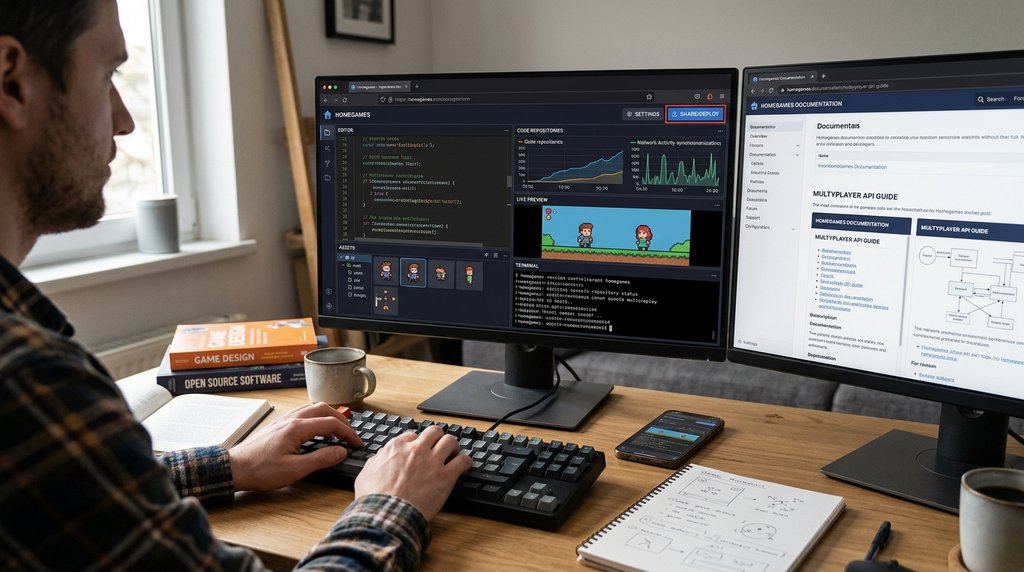
Homegames has introduced an open-source platform designed to simplify game creation and sharing directly within a web browser. Developed over eight years, the platform allows users to build and publish simple JavaScript-based games without requiring complex installations or specialized software.
Homegames, a new open-source platform, has launched to enable users to develop and share simple games directly within their web browsers. The platform, which has been under development since 2018, emphasizes accessibility by allowing all games to be built using JavaScript classes, with their source code readily available for review. A key feature is an integrated in-browser editor, empowering creators to make and publish games entirely from their web interface, fostering a more streamlined development experience.
This initiative aligns with a growing trend towards democratizing game development, making it accessible to a broader audience beyond experienced programmers. By eliminating the need for complex software installations and specialized development environments, Homegames significantly lowers the barrier to entry for aspiring game creators. The open-source nature of the platform further encourages collaboration and learning, as developers can inspect, modify, and build upon existing game code, fostering a community-driven approach to innovation in web-based gaming.
The introduction of Homegames could have a notable impact on the web game ecosystem, potentially leading to a surge in new, experimental, and diverse game titles. For hobbyists, educators, and independent developers globally, the platform offers a straightforward pathway to bring their game ideas to life and share them with a wider audience. This focus on simplicity and open access is poised to cultivate a more vibrant and inclusive community of creators, driving further innovation in interactive web experiences.
— AIDEN Editorial Team · Reviewed by 이현민
What this means for the market
While Homegames itself is not an AI-centric platform, its open-source nature and focus on accessible, in-browser game development contribute to a broader ecosystem where AI tools are increasingly integrated. By lowering the barrier to entry for game creation, it could indirectly foster a larger pool of developers who may eventually experiment with AI for content generation, game logic, or player experience enhancements. This democratization of development aligns with trends where AI is making complex tasks more accessible across various creative industries.
How this issue is unfolding
Homegames is a platform that significantly enhances the accessibility of web-based game development and play. By allowing users to create and share games directly in their browser without complex development environment setups, it can potentially enable more people to participate in game development and foster new forms of web game ecosystems. In particular, with all game and platform code released as open source, it provides a foundation for developers to learn from existing games, fork them, and create new ones. Furthermore, by automatically handling multiplayer functionality within the platform, it helps developers focus on game logic without the burden of writing networking code, thus playing a crucial role in lowering the barrier to entry for web game development. This is expected to promote diversity and innovation in the web game market, alongside no-code/low-code game engines like GDevelop and open-source web game platforms such as Playlight.