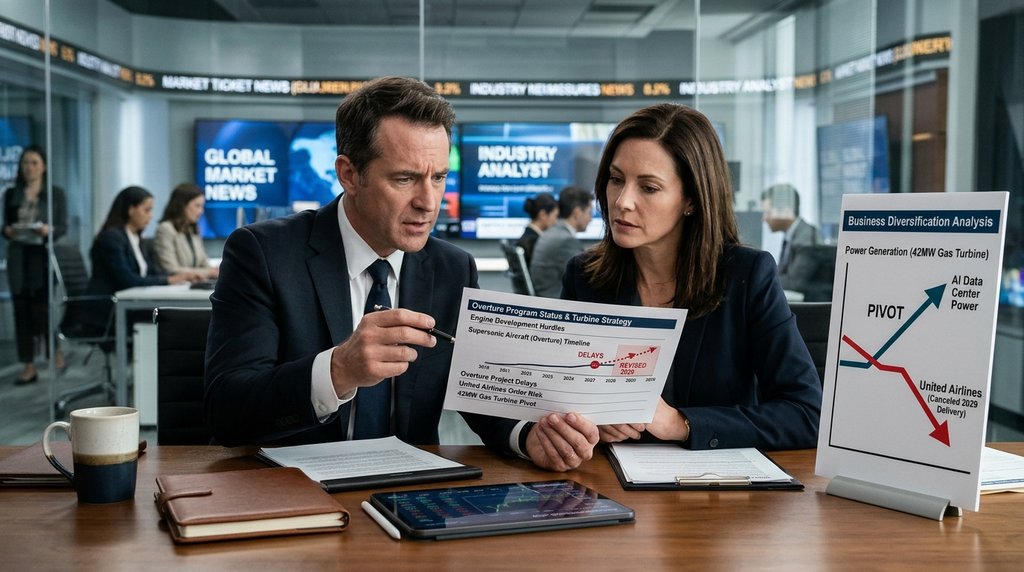
Boom Supersonic is attempting to address severe grid constraints facing artificial intelligence data centers by applying its aerospace propulsion technology to on-site energy generation. Founder and chief executive Blake Scholl unveiled a $150 million, 200,000-square-foot facility known as the Superfactory in Centennial, Colorado, designed to manufacture 42-megawatt natural gas turbines called Superpower. Scholl noted that the decision to branch into power generation followed discussions with OpenAI chief executive Sam Altman, who urged the startup to produce as many turbines as quickly as possible to counter the AI power crunch. The dual-track strategy aims to generate revenue and operational engine data, but entering heavy industrial infrastructure before completing its core supersonic passenger aircraft has triggered skepticism across both the aviation and technology sectors.
The strategic shift highlights the intense pressure startups face from rigorous aviation certification standards and widespread electrical grid congestion. Following the breakdown of its engine development partnership with Rolls-Royce, Boom Supersonic was forced to develop its proprietary Symphony engine while navigating Federal Aviation Administration airworthiness and environmental hurdles. In response, the company pitched its waterless on-site turbines as a path to commercial cash flow and technical validation, with Scholl calling for a renaissance in both energy and supersonic flight. Nevertheless, diverting engineering and capital resources toward energy production has frayed relationships with airline partners who view the ambitious roadmap as an operational distraction.
Confidence in the company delivery schedule took a direct blow when key customer United Airlines cast doubt on the startup ability to meet its targets. In a podcast interview released on October 28, 2026, United Airlines chief executive Scott Kirby stated that Boom planned 2029 delivery date for the Overture airliner will not happen and that the development timeline will take longer. Compounding the challenge, a $1.25 billion contract signed in December 2025 to supply 29 Superpower turbines to Crusoe has been canceled. With Boom targeting production of 25 turbines representing one gigawatt in 2028 and scaling to 50 turbines generating two gigawatts by 2029, the startup faces mounting internal competition for manufacturing resources as its primary aviation client questions whether its flagship passenger jet will ever arrive on schedule.