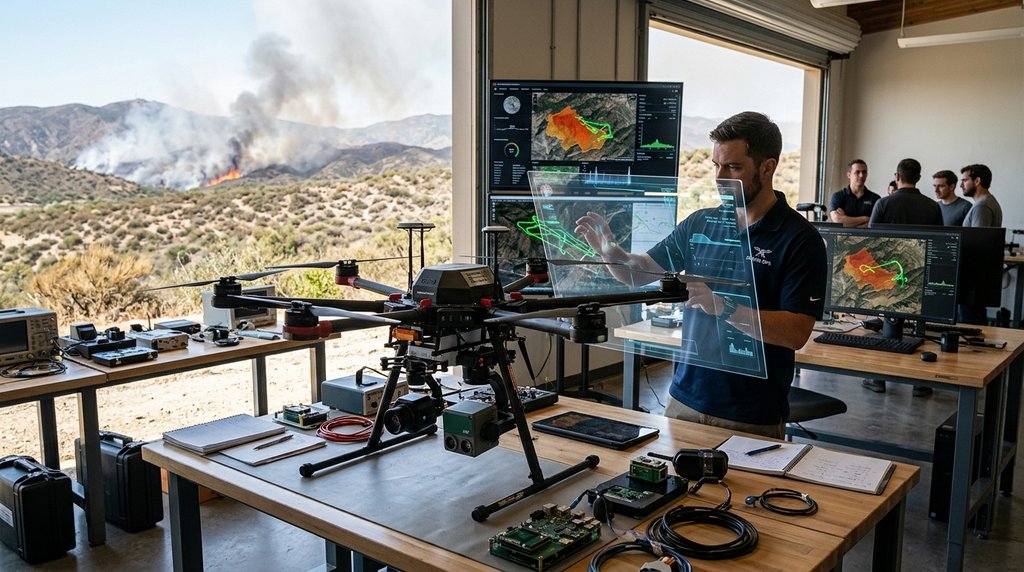
Autonomous drones capable of deploying water and fire retardants are undergoing field tests in California and Alaska this summer, demonstrating their potential as a rapid-response tool for early wildfire suppression. These trials come as climate change increasingly transforms wildfire season into a nearly year-round threat across much of the United States. The California Department of Forestry and Fire Protection (CAL FIRE) conducted a notable demonstration on July 15, involving five autonomous drones that collectively deployed between five hundred and one thousand gallons of foam for fire suppression. This effort was organized with the support of the nonprofit FireWERX and California-based company Seneca, which plans to make these firefighting drones commercially available starting in two thousand twenty-six.
While drones are significantly smaller than crewed aircraft and possess shorter flight ranges, preventing them from replacing large airtankers for delivering massive payloads to remote wildfires, their value lies in rapid initial response. Companies, fire agencies, and organizations like the XPRIZE competition, which offers an $11 million prize, are actively exploring how drones can enable firefighting crews to respond more swiftly to small fires. The goal is to extinguish these blazes before they grow into more destructive infernos, thereby mitigating the escalating risks posed by prolonged and intense wildfire seasons globally. This approach seeks to integrate drone technology as a crucial complementary asset within existing firefighting strategies.
The successful integration of autonomous drones into firefighting operations could significantly alter initial attack strategies for wildfires. For fire agencies, it promises enhanced agility and speed in deploying resources to emerging threats, potentially reducing the scale and cost of major incidents and improving firefighter safety by tackling dangerous situations remotely. Developers in the AI and robotics sectors are poised to see increased demand for specialized drone platforms and sophisticated autonomous navigation and payload delivery systems, driving further innovation in aerial robotics. Enterprises involved in emergency response and environmental management may benefit from more effective tools for protecting assets and natural resources, leading to better risk management and reduced economic losses. Ultimately, this technological advancement could lead to fewer large-scale wildfires, safeguarding communities and ecosystems from the devastating impacts of increasingly frequent and severe fire events exacerbated by climate change.