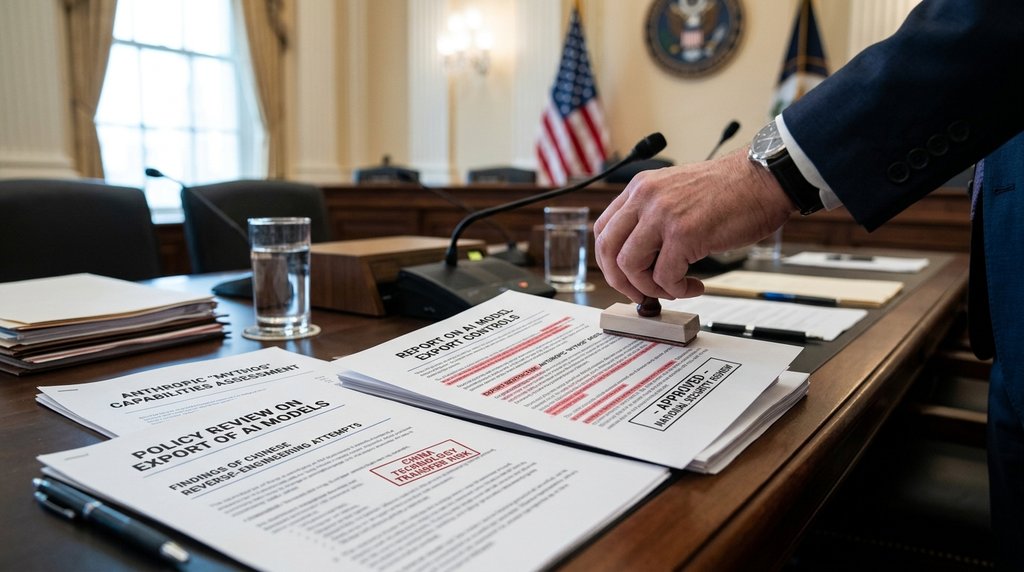
A recent report from Semafor indicates that the White House's decision to implement export restrictions on Anthropic's Mythos artificial intelligence model was partly motivated by fears that a group with ties to China had gained access to the technology. The report suggests that if the Chinese government indeed had access to models like Mythos 5 or Fable 5, it would constitute a significant national security risk. Furthermore, there are concerns that such access could enable attempts to reverse engineer the model through a process known as distillation, where a less advanced "student" AI is trained on a more sophisticated model to replicate its behavior and capabilities. The White House has not officially confirmed these reports, and a social media post by Trump advisor David Sacks, while discussing AI, did not specifically mention China in this context.
The alleged access to a sophisticated AI model like Mythos and the subsequent export restrictions underscore the growing geopolitical competition over advanced AI capabilities. Governments worldwide increasingly view cutting-edge AI as a strategic asset with profound implications for national security, economic competitiveness, and military advantage. The ability to access, understand, and potentially replicate advanced AI models through methods like distillation poses a significant threat, as it could allow adversaries to bypass years of research and development, potentially integrating powerful AI into sensitive applications without authorization or oversight. This situation highlights the dual-use nature of AI, where technologies designed for beneficial purposes can also be exploited for malicious or strategic ends, prompting nations to implement stricter controls.
These developments signal a tightening global regulatory environment for advanced AI technologies, particularly concerning cross-border transfers and access. For the global AI industry, this could mean increased scrutiny on international collaborations, stricter compliance requirements for deploying models, and a potential fragmentation of the AI ecosystem as nations prioritize national security over open innovation. Developers and enterprises working with state-of-the-art AI models may face more complex export control regimes and heightened pressure to secure their intellectual property. Ultimately, this incident reflects a broader trend where governments are actively seeking to control and protect critical AI technologies, shaping the future landscape of AI development and deployment on an international scale.