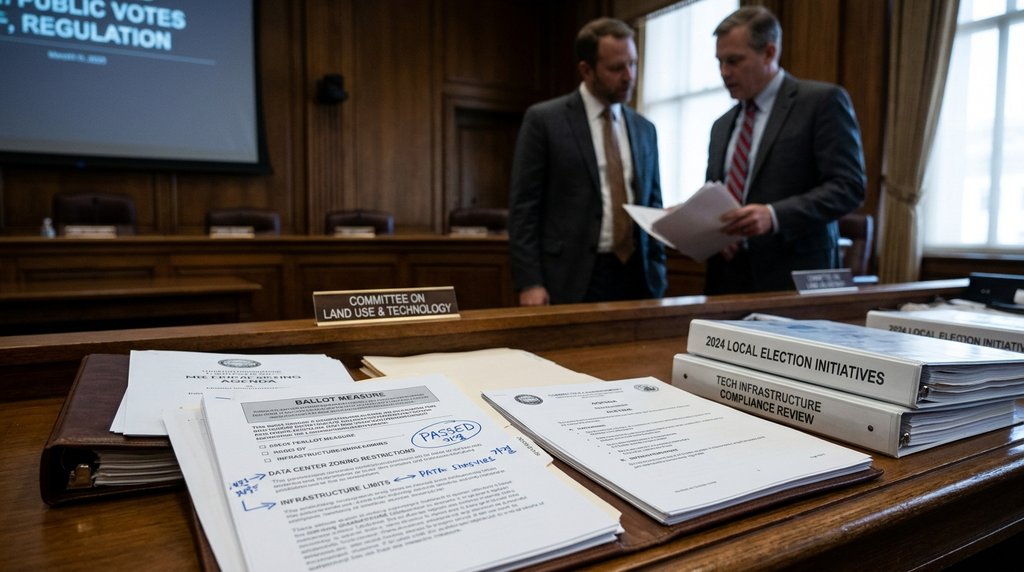
US voters approve 38 ballot measures restricting AI data center expansion
Ars Technica|AIDEN Editorial|Nov 04, 2026
Voters across 10 US states passed at least 38 ballot measures to curb or halt AI data center construction during recent midterms and local elections. The grassroots backlash highlights mounting concerns over soaring electricity bills, water depletion, and noise pollution caused by massive computing facilities.
Grassroots voters across the United States have dealt a significant blow to Big Tech expansion plans by approving dozens of local measures restricting new artificial intelligence data centers. According to reporting by Ars Technica and tracking data compiled by polling firm Redbud Consulting, at least 38 out of 44 ballot initiatives aimed at controlling data center growth were approved across 10 states. Residents turned out across party lines to halt proposed facilities over concerns that excessive industrial energy consumption drives up household utility bills while massive cooling operations deplete water supplies and generate persistent noise. Only one measure allowing a data center to proceed was approved, in Harwood, North Dakota, and even that project was subjected to mandatory public hearings and developer-funded independent reviews.
The widespread voter pushback shifts the focus of AI policy from model safety and high-level tech competition to localized infrastructure burdens. Beyond local referendums, the political landscape shifted in key deployment hubs such as Texas, where Democratic candidate Gina Hinojosa won the governorship after campaigning on a moratorium against new data center projects. Similar voter-approved limits on footprint size and grid intake passed in states including Ohio, Illinois, and Maine. Financial analysts warn that these regulatory obstacles will substantially alter growth forecasts. Goldman Sachs economic analysts estimated that the resulting short-term moratoriums could directly affect roughly 45 percent of planned data center capacity expansions across the country.
Market strategists, including Franklin Templeton chief market strategist Stephen Dover, noted that the slowdown will force developers to navigate steep regulatory hurdles and rising compliance costs. While projects already permitted and scheduled through 2027 are expected to proceed, large-scale facilities planned for 2028 and beyond face severe permitting bottlenecks, mandatory community hearings, and renegotiated environmental fees. Cloud providers and hyperscale infrastructure teams must now treat local community acceptance as an essential planning requirement alongside power procurement, signaling that long-term AI compute roadmaps will face extended construction delays and revised capital spending priorities.
— AIDEN Editorial Team
What this means for the market
The political resistance to data centers in the United States illustrates that physical resource constraints, particularly local power grids and water supplies, have become major determinants of AI infrastructure expansion. Global tech giants may be forced to lengthen deployment timelines and reallocate capital expenditures toward regions that offer clearer regulatory pathways and predictable grid capacity. As local communities demand environmental accountability and public oversight, hyperscale operators worldwide will need to incorporate community-level concessions and higher compliance costs into their long-term capacity projections.
How this issue is unfolding
The rapid expansion of AI data centers pushed by the Donald Trump administration and Big Tech through grid deregulation has run directly into localized voter resistance. Angered by soaring residential electricity costs, water depletion, and noise pollution, voters crossed party lines to pass regulatory measures. In addition to ballot measures approving construction moratoriums and limits on land use and power consumption in key states like Ohio, Illinois, and Maine, political leadership shifted in major infrastructure hubs like Texas. These election outcomes are expected to concentrate permitting delays on new projects slated for operation after 2028 rather than short-term builds approved through 2027. Consequently, Big Tech aggressive capital expenditure roadmaps now face the challenge of overcoming local political bottlenecks in addition to power supply constraints.