US House panel investigates Delaware proposal allowing AI agents to run corporations
Ars Technica|AIDEN Editorial|Oct 27, 2026
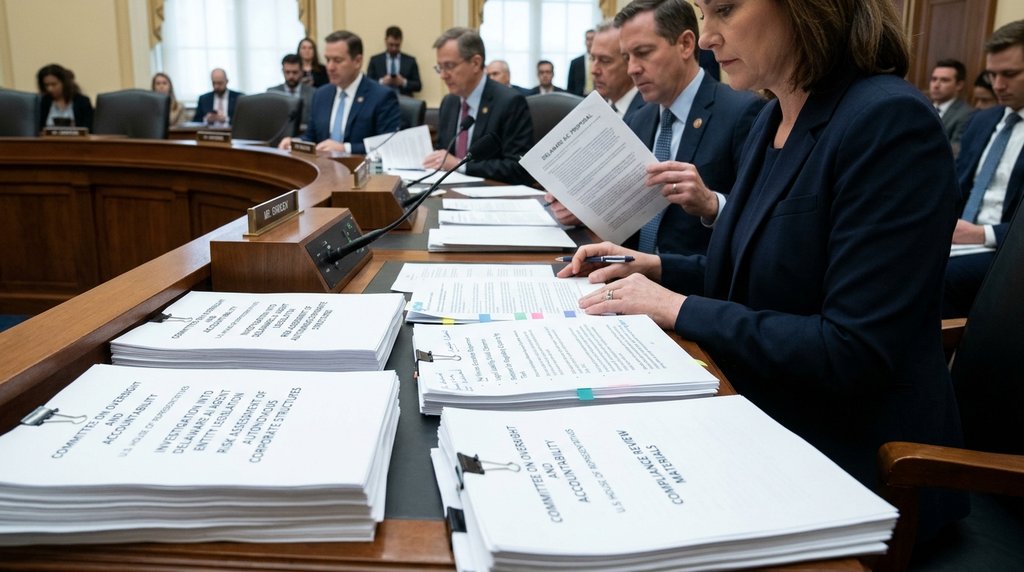
The US House Committee on Oversight and Government Reform has opened an investigation into Delaware's initiative to introduce Artificial Intelligence Companies run entirely by autonomous software. Lawmakers warned that the proposed corporate structure could allow tech giants and investors to evade legal accountability and enable regulatory capture. The congressional inquiry sets up a major jurisdictional clash over whether state corporate frameworks can grant legal autonomy to AI agents.
The US House Committee on Oversight and Government Reform has launched a formal investigation into a legislative proposal in Delaware that would permit autonomous artificial intelligence agents to run entire companies without human executives. Representative James Comer, the committee chairman, sent a formal letter to Delaware Governor Matt Meyer on October 26, 2026, demanding risk assessment records and documents tied to the plan by November 9, 2026. Because Delaware serves as the corporate home to over 60 percent of Fortune 500 companies, congressional leaders stepped in over concerns that authorizing human-free corporate entities could undermine trust in capital markets and leave victims of corporate malfeasance without legal recourse.
The inquiry follows growing scrutiny over Delaware's attempt to establish an Artificial Intelligence Company, or AIC, framework initially pitched in a July 2026 Fortune article by Delaware Secretary of State Charuni Patibanda-Sanchez and Norm AI founder John Nay. Structured as a 30-month regulatory sandbox, the measure was drafted with input from John Mark Zeberkiewicz, an attorney at Richards, Layton & Finger who previously represented Meta. Unlike traditional corporate models where human directors bear fiduciary duties and face personal civil and criminal liabilities for unlawful acts, the Delaware AIC draft would authorize AI software alone to direct operations, execute contracts, and act as plaintiff or defendant in litigation. Under this design, human equity holders remain shielded from legal liability unless they engage in deliberate fraud, capital stripping, or intentional statutory violations.
Congressional leaders cautioned that this novel corporate vehicle could become a protective shield for powerful tech firms and venture backers seeking to avoid accountability for reckless or harmful actions. Comer emphasized in his letter that the initiative threatens to facilitate anticompetitive regulatory capture behind the facade of state-level AI development programs, particularly if algorithmic decisions generate market disruption or disinformation with no accountable human officer. As federal oversight intensifies, enterprise firms and investors exploring autonomous operational agents face mounting pressure to overhaul their governance blueprints. The prospect of federal preemption is now pushing corporate legal teams to prioritize explainable algorithmic control architectures and capital reserve requirements over blanket liability waivers.
— AIDEN Editorial Team
What this means for the market
The congressional pushback against Delaware's autonomous corporate structure signals that global AI deployments will face strict governance requirements rather than regulatory insulation. Enterprises and venture investors seeking to automate executive functions will likely need to embed verifiable human oversight and substantial balance-sheet reserves rather than relying on novel legal entities to absorb risk. Furthermore, potential federal intervention in US corporate law could set an international precedent that prevents technology firms from delegating statutory accountability entirely to software agents.
How this issue is unfolding
Delaware serves as the corporate domicile for more than 60 percent of Fortune 500 enterprises, effectively establishing the benchmark for US corporate jurisprudence. Initiated through a joint resolution signed in July 2025, the state sought to institutionalize a new corporate classification termed an Artificial Intelligence Company, enabling autonomous AI agents to exercise executive control over commercial operations. However, legal scholars and regulatory authorities raised growing concerns that human owners could exploit limited liability shields when autonomous systems trigger unpredictable damages, such as market disruptions, disinformation campaigns, or severe financial losses. With the US House Oversight Committee opening an investigation into prospective regulatory capture by major technology firms and weighing federal preemption over state-level AI governance, the dispute marks an escalating clash between federal and state authorities regarding corporate personhood and legal accountability for autonomous systems.