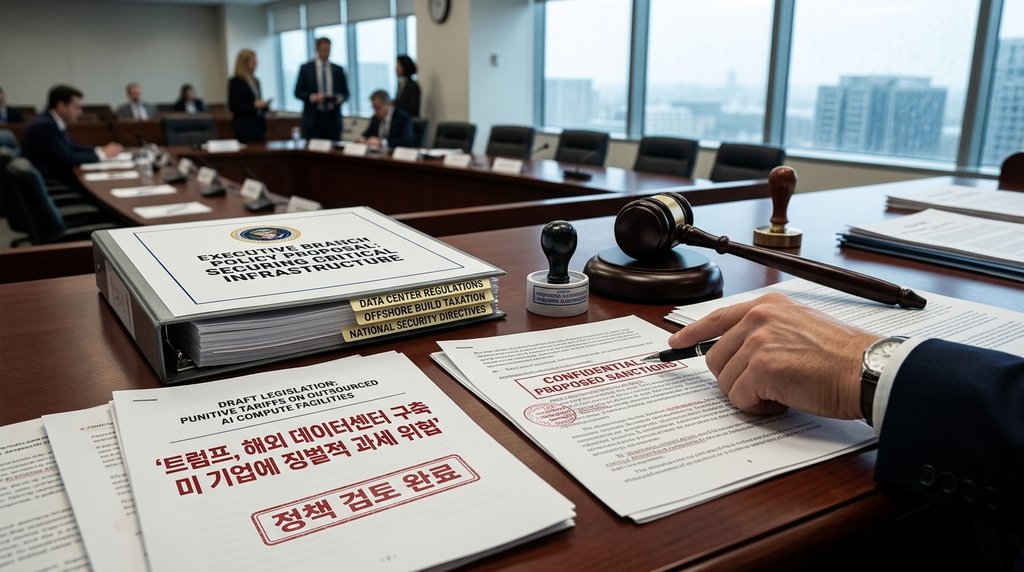
Donald Trump threatens steep taxes on tech firms building data centers overseas
The Verge|AIDEN Editorial|Nov 20, 2026
President Donald Trump announced plans to impose heavy taxes and penalties on American technology companies that establish artificial intelligence data centers abroad. The move aims to keep computing infrastructure within US borders despite mounting domestic power constraints and local zoning restrictions. Tech giants seeking alternative locations in neighboring countries now face heightened regulatory risks and cross-border uncertainty.
President Donald Trump announced intentions to impose heavy taxes and punitive penalties on domestic technology companies that build artificial intelligence data centers outside the country, according to reports from The Verge and The Washington Post. Speaking at a White House briefing, Trump referenced the historical departure of semiconductor manufacturing and broader industrial production overseas, warning that allowing computing infrastructure to leave would ultimately enable China to take control of it. The declaration marks a clear strategic shift toward treating physical computing facilities and electrical capacity, rather than algorithmic software alone, as vital national assets that must remain anchored domestically.
This aggressive push toward industrial protectionism differs fundamentally from previous technology policies focused on risk frameworks, algorithm controls, or European Union regulations like the AI Act. Trump argued that firms reluctant to build in states like Texas or California should look to locations such as West Virginia instead. However, reporting indicates the policy proposal was introduced without advance consultation across White House staff, and specific statutory mechanisms or administrative procedures to enforce cross-border penalties remain unclarified. Meanwhile, technology companies face rising local resistance at home, where concerns over strained utility grids, surging electricity bills, and environmental noise have spurred bans. In Ohio, local referendum votes passed restrictions freezing data center development, directly disrupting a $17 billion planned investment by Amazon.
The White House stance introduces immediate hurdles for major technology firms attempting to diversify operational infrastructure across North America. Projects such as Meta computing initiatives north of Edmonton, Canada, alongside a 20-year lease agreement between Anthropic and EverWind Fuels in Nova Scotia, face direct exposure to policy friction. For cloud operators and model developers preparing capital expenditures over the coming months, navigating administrative pressure from Washington while contending with domestic municipal pushback could freeze investment decisions. Delays in securing grid capacity and rising domestic energy costs threaten to create bottlenecks that slow broader artificial intelligence deployment.
— AIDEN Editorial Team
What this means for the market
The aggressive move to penalize international facility expansion creates a sharp dilemma for global cloud operators and model developers managing massive capital expenditures. As enterprise access to domestic electrical grids tightens, blocking offshore diversification across neighboring markets threatens to bottleneck raw computing capacity worldwide. The resulting infrastructure delays could elevate operational overhead and slow development cycles across the broader artificial intelligence sector.
How this issue is unfolding
US technology giants have pursued distributed data center investments across Canada, Europe, and Southeast Asia to accommodate surging computing demand and overcome domestic grid congestion. However, municipal authorities and residents across the United States have restricted facility permits due to severe power consumption, operational noise, and rising residential electricity costs. Despite this grassroots opposition, President Donald Trump framed the outward shift of data infrastructure as a national security defeat comparable to the historic loss of semiconductor manufacturing, asserting a protectionist stance to compel domestic development in the strategic rivalry with China. This taxation threat imposes direct regulatory risk and escalating financial pressure on American cloud and AI enterprises struggling to expand both at home and abroad.