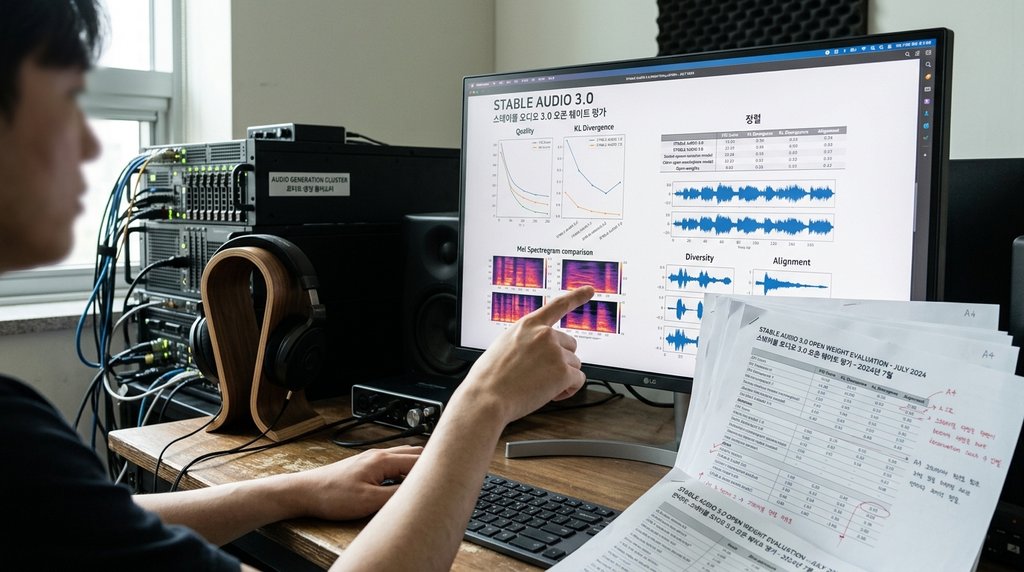
Stability AI has announced the release of Stable Audio 3.0, an open-weight model family specifically designed for artistic experimentation in generative audio. This latest iteration represents a significant step in making advanced audio creation tools more accessible to a broader community of artists, developers, and creators. A core tenet of this release is the explicit assurance that users retain full ownership and distribution rights over any outputs generated using the model. This commitment to creator autonomy is a key differentiator in the evolving landscape of generative AI, where intellectual property rights for AI-generated content are a growing concern. By providing an open invitation to experiment, Stability AI aims to foster a collaborative environment where new innovations in audio generation can emerge from diverse creative applications.
The introduction of Stable Audio 3.0 comes at a time when the generative AI market is rapidly expanding beyond its initial focus on text and image into the complex domain of high-quality audio. This shift reflects a growing demand for AI tools capable of producing nuanced and creative soundscapes, music, and voice. Stability AI's decision to release an "open-weight" model is particularly noteworthy. Unlike proprietary, closed-source models, open-weight models allow developers and researchers to inspect, modify, and build upon the underlying architecture, fostering transparency and accelerating collective innovation. This approach contrasts with some industry trends towards highly controlled, performance-driven closed systems, positioning Stability AI as a proponent of an open ecosystem where community contributions can drive the technology forward. The emphasis on user ownership also addresses critical discussions around intellectual property in AI, providing clarity and empowerment to creators.
The availability of Stable Audio 3.0 is poised to have several implications for the global AI industry and creative sectors. For individual artists and independent developers, it democratizes access to sophisticated audio generation capabilities, potentially lowering barriers to entry for music production, sound design, and multimedia content creation. Enterprises in fields such as gaming, film, and advertising could leverage this open-weight model for rapid prototyping, custom sound asset generation, and exploring new creative avenues without restrictive licensing concerns over their outputs. Furthermore, by encouraging widespread experimentation, Stability AI's initiative could accelerate the development of novel applications and techniques within generative audio, pushing the boundaries of what AI can achieve in sound. This move reinforces the company's broader strategy of championing open AI, potentially influencing other developers and policymakers to consider the benefits of transparent and creator-friendly AI models.