SpaceX is advancing plans for a significant artificial intelligence (AI) chip manufacturing facility, named 'Terafab,' to be built in Austin, Texas. The project is slated for an initial investment of at least $55 billion, with projections indicating a potential expansion to $119 billion. This ambitious undertaking aims to enable SpaceX to produce AI chips capable of supporting 200 gigawatts of computing annually. This move represents a strategic effort by the company to bolster its internal AI capabilities and reduce its reliance on external suppliers for critical hardware components, ensuring greater control over its technological roadmap.The initiative comes amid a period of explosive growth in AI technology, which has led to a corresponding surge in demand for high-performance computing resources. The current AI chip market is characterized by a high dependency on a limited number of suppliers, such as Nvidia, creating supply chain vulnerabilities that can hinder AI development and service expansion. This reliance has often resulted in bottlenecks for companies seeking to scale their AI operations. SpaceX itself requires substantial AI processing power across its diverse operations, including its Starlink satellite internet service, which demands immense computational power for network management and data processing, as well as its autonomous driving projects and sophisticated rocket control systems. In this context, securing proprietary AI chip production capabilities is interpreted as a strategic decision to reduce external reliance and strengthen its core technological sovereignty, ensuring a stable and tailored supply for its advanced projects.SpaceX's substantial investment is anticipated to have significant ripple effects across the broader AI chip market. By producing its own chips, SpaceX could achieve considerable cost reductions in its AI infrastructure development, potentially freeing up resources for further innovation. Moreover, it can enhance its technological competitiveness through optimized hardware-software integration, tailoring chips precisely to its unique operational demands. Furthermore, this move could introduce a new competitive dynamic for established AI chip leaders like Nvidia, potentially increasing market dynamism and fostering innovation across the industry. In the long term, it might accelerate a trend among other major technology companies, similar to Tesla's 'Dojo' AI chip, to vertically integrate chip development and production to meet their extensive AI infrastructure needs, thereby gaining more control over their technology stack. Beyond the technological implications, the project is also expected to contribute significantly to large-scale job creation and economic revitalization in the Texas region, attracting skilled labor and fostering a local tech ecosystem.Source: https://www.theverge.com/ai-artificial-intelligence/926356/spacex-terafab-plant-cost-ai-chips
SpaceX plans $55 billion Terafab plant in Texas for AI chip production
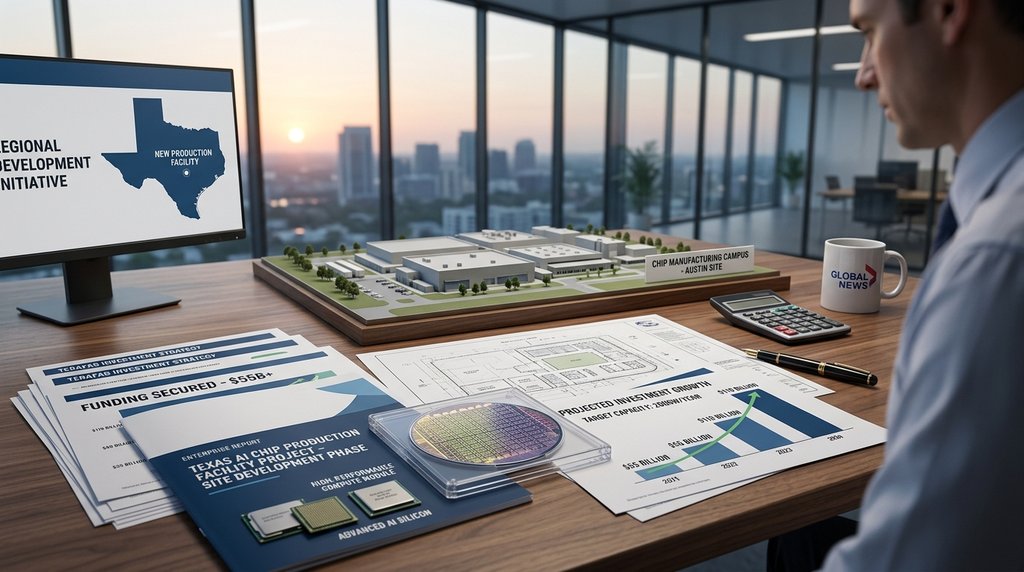
SpaceX is moving forward with plans to construct a large-scale artificial intelligence chip manufacturing facility, dubbed 'Terafab,' in Austin, Texas. The project involves an initial investment of at least $55 billion, with potential expansion up to $119 billion, aiming to produce AI chips capable of supporting 200 gigawatts of annual computing power.
Source: The Verge