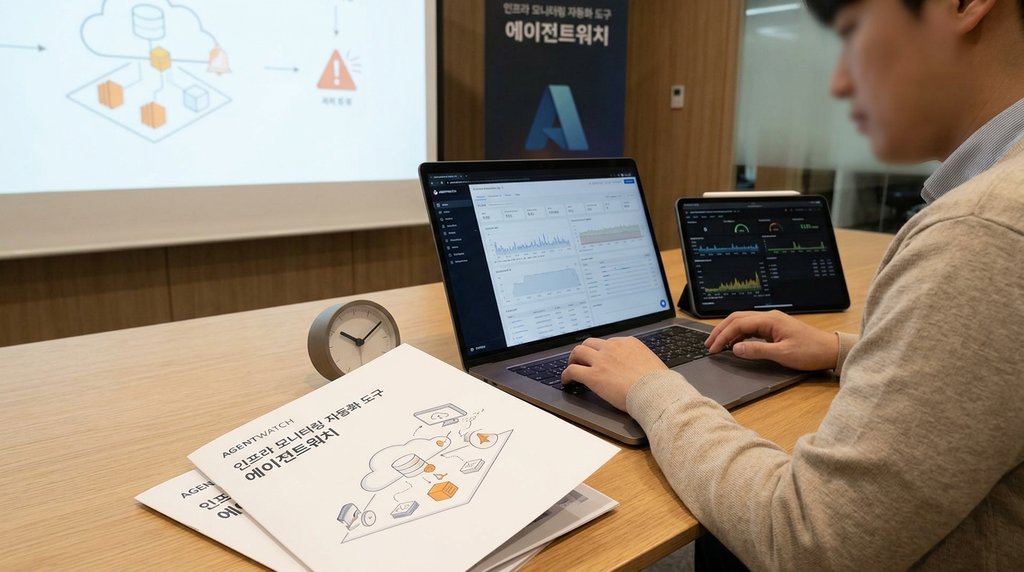
AWS has introduced AgentWatch, a new ambient monitoring agent designed to enhance the proactive management of cloud resources for DevOps teams. This solution aims to shift the paradigm from reactive incident response, where issues are often detected only after they have impacted customers or accumulated unnoticed, to a more preventative approach. AgentWatch continuously observes AWS infrastructure, analyzing patterns in CloudWatch metrics, logs, and alarms across multiple accounts. It performs infrastructure checks every fifteen minutes, summarizing critical data and delivering actionable reports directly to platforms like Slack, while also responding to natural language queries about infrastructure status.
The introduction of AgentWatch addresses significant operational challenges faced by teams relying on traditional reactive monitoring. Existing methods often lead to alert fatigue, constant context-switching between various tools, and time-consuming post-mortems for preventable problems. Issues such as delayed CloudWatch alarm triggers, unnoticed AWS Lambda errors, and undetected Amazon EC2 performance degradations frequently result in customer-reported problems and missed service level agreement targets. By automating the continuous observation and analysis of infrastructure, AgentWatch seeks to free up engineers from routine monitoring tasks, allowing them to focus on innovation rather than constant firefighting. This shift is crucial in an environment where the complexity of cloud deployments is rapidly increasing, demanding more sophisticated and autonomous management solutions.
For enterprises and DevOps teams, AgentWatch promises a substantial improvement in operational efficiency and reliability. By surfacing insights only when human judgment or action is truly needed, it reduces the burden of constant manual checks and fragmented data analysis. This proactive stance can lead to fewer customer escalations, better adherence to SLAs, and a reduction in technical debt by enabling teams to implement preventive measures rather than just reacting to failures. Developers will benefit from a more stable environment and clearer insights into potential issues, allowing them to build and deploy with greater confidence. The integration with natural language queries also lowers the barrier to entry for infrastructure management, making it more accessible and intuitive. Ultimately, AgentWatch represents a step towards more autonomous and intelligent cloud operations, aligning with the broader industry trend of leveraging AI and machine learning to manage increasingly complex distributed systems.