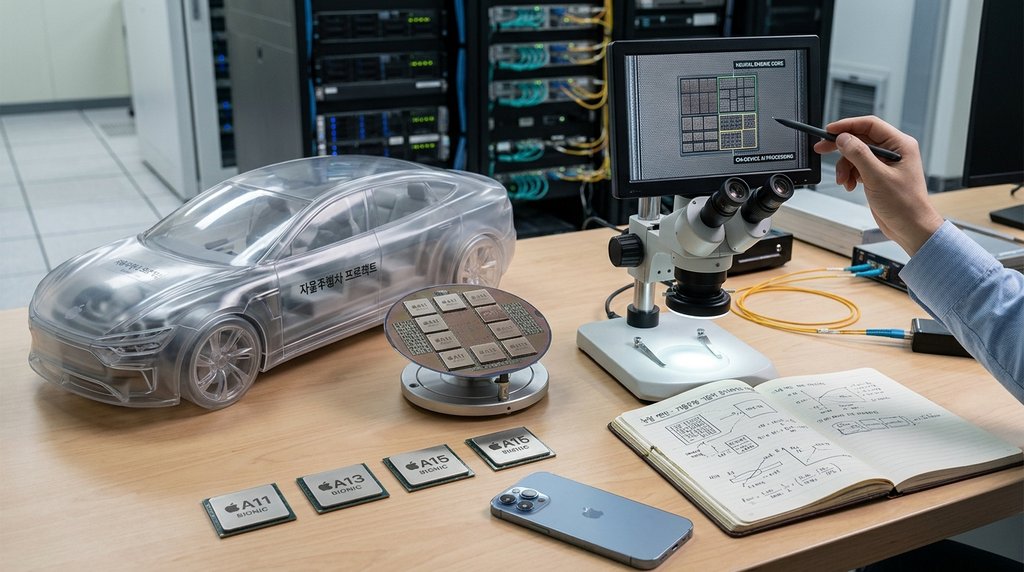
Apple's ambitious self-driving car initiative, despite never reaching commercialization, inadvertently laid the groundwork for its advanced on-device AI processing capabilities. The company recognized early on the critical need for powerful AI chips to support autonomous driving. This realization, as detailed by Mark Gurman, directly led to the creation of the Neural Engine, a core component of Apple's current AI strategy. The Neural Engine first appeared in the iPhone X with the A11 Bionic chip, initially supporting computer vision features like FaceID and Animoji.
The pivot from a full self-driving car to focusing on underlying AI hardware highlights a common industry trend where ambitious projects, even if commercially unsuccessful, can yield significant technological advancements. Apple's early investment in dedicated on-device AI processing units positioned it uniquely in the burgeoning AI landscape. While many companies relied on cloud-based AI, Apple's strategy emphasized local processing, offering benefits in terms of privacy, speed, and efficiency. This foresight allowed Apple to integrate sophisticated AI features directly into its consumer devices, differentiating its ecosystem.
The legacy of the self-driving car project, embodied by the Neural Engine, has profound implications for the global AI industry. It underscores the importance of specialized hardware for efficient AI execution, particularly as on-device AI becomes increasingly critical for edge computing, privacy-sensitive applications, and real-time interactions. For developers, this means a robust platform for building AI-powered applications that leverage local processing power. For consumers, it translates to more responsive and secure AI features across Apple's product line. This strategic focus on integrated hardware and software continues to shape Apple's competitive advantage in the rapidly evolving AI market, influencing broader industry trends towards more distributed and efficient AI architectures.