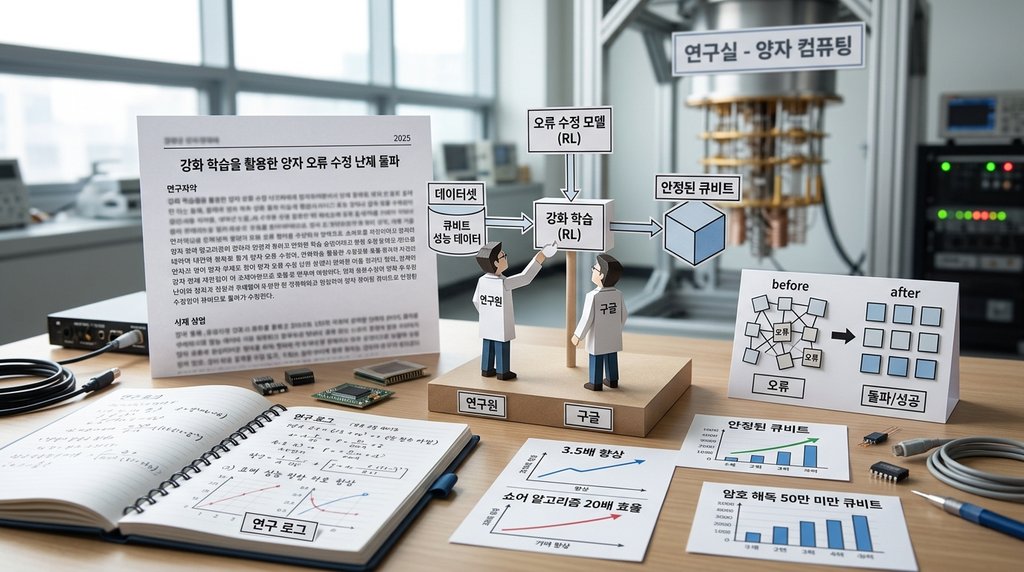
The integration of machine intelligence into quantum systems to enable them to "learn from their errors" represents a significant conceptual leap in quantum computing. This approach aims to address the inherent fragility of quantum states, which are highly susceptible to environmental noise and decoherence. By leveraging artificial intelligence, quantum systems could potentially self-correct in real-time, a capability vital for scaling up quantum processors and moving towards fault-tolerant quantum computation. This research signifies a critical step in making quantum computers more robust and reliable, a prerequisite for their widespread adoption and utility.
Quantum computing's immense promise in fields like materials science, drug discovery, and cryptography is currently hampered by the extreme sensitivity of qubits. Errors accumulate rapidly, making long, complex computations unfeasible with current technologies. Traditional quantum error correction methods demand a substantial overhead of physical qubits to encode logical qubits, a requirement that quickly becomes prohibitive for larger systems. The application of machine intelligence offers a pathway to more efficient and adaptive error correction, potentially reducing the resource cost and complexity associated with maintaining quantum coherence and extending the operational lifespan of quantum computations.
The ability for quantum computers to autonomously learn and correct errors could significantly accelerate the development of fault-tolerant quantum systems. This would open doors for developers to design more sophisticated quantum algorithms without being constantly constrained by high error rates. For enterprises, it means a clearer path towards leveraging quantum computing for real-world problems, from optimizing complex logistical challenges to discovering new materials. Policymakers will also need to consider the implications of increasingly powerful quantum capabilities, particularly in areas like cybersecurity, as the technology matures and becomes more robust. This research underscores the growing convergence of AI and quantum computing as critical frontiers in technological advancement.